
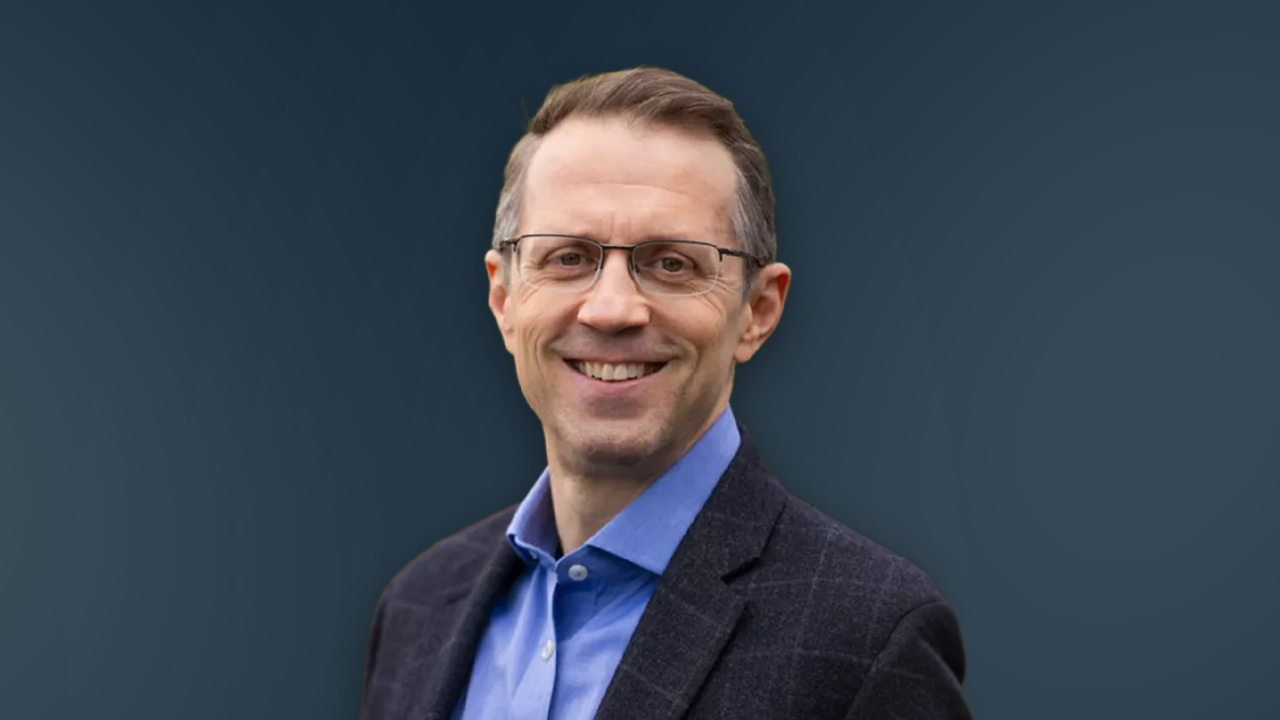

I firmly believe that we are entering a period of scarcity when it comes to the senior living real estate product.

What does the future hold for senior living, and how can operators position themselves to capitalize on an evolving industry? In this episode of VERSED, Steve Kennedy sits down with Nick Stengle, CEO of Brookdale Senior Living, to discuss his unique career journey, from serving as an Air Force fighter pilot and Top Gun instructor to leadership positions in private equity, hospitality, home health, hospice, and senior living. Nick explains how lessons learned in the military continue to shape his leadership philosophy, particularly the importance of inspiring people rather than relying on authority. The conversation explores Brookdale's strategic transformation as they position themselves for the future of senior living.
00:24 - 04:53
Steve Kennedy
Welcome to the latest VERSED Podcast. I'm your host, Steve Kennedy, and this is VERSED, powered by VIUM Capital. And I am really enthusiastic about today's guest, the CEO of Brookdale Senior Living, Nick Stengle. Nick, welcome to the VERSED Podcast.
Nick Stengle
Hey, Steve. Good to see you again. And thanks for allowing me to join.
Steve Kennedy
Yeah, for sure. So I was with Nick a few months ago in D.C. at an American Health Care Association, National Center of Assisted Living-related gathering, and I had not met Nick in person. I had heard about him, and he became CEO of Brookdale a year or so ago. But as I learned about his background, I really wanted to bring his perspective to VERSED for our listeners. And so, Nick, if you don't mind, just give listeners who may not be as familiar with you with, with your background, but specifically Brookdale give them a sense of Brookdale size and scope and then we'll delve into your unique background.
Nick Stengle
Yeah. Let me give a little bit of the wave tops of Brookdale and a bit about myself as well. So Brookdale is the largest publicly traded owner operator in the senior living space, where about to stabilize at right around 518 communities. And an important part of that is that we own 80% of our overall capacity, and the remaining 20% is in triple net leases.
Unlike some of our peers who are operators. We're not a management company, which is the more typical model. We actually own a significant component of our real estate. In fact, we're the third largest owner of senior living real estate after only one. Number one, Welltower. Number two, Ventas. Number three is our company, Brookdale. We offer the full spectrum of care and services that you typically find in senior living.
So we have meaningful assisted living, memory care, independent living, and a very small sliver of skilled nursing as well. But we do definitely bias, especially as compared to the overall industry, more towards the needs-based side. So 75% of our units of our capacity is either assisted living or memory care, around 25%. Being independent living is the industry norm is usually around 5050 for most of our peers in the overall industry.
And again, I did allude to the fact that we have a very small sliver of skilled nursing. Call it 1 or 2%, which we combined with some of our CRS, which is the minority of our business. The other interesting thing is we are 94% private pay, which is, I think, the real point: we are very much in assisted living, memory care, independent living, as opposed to skilled nursing and all the other, you know, true health care providers.
We're in 41 states, about 125 markets, and have been on a very long journey; maybe we'll talk through this podcast a little bit about myself. So I've been enrolled for just over one year now. In fact, I just celebrated my one-year anniversary at the beginning of October. Came most directly from Geneva Hospice, which is large.
It's the largest hospice provider in the US. Privately held company. Just prior to that, I was with Sunrise Senior Living, a top five, a great senior living management company and development company, and had the good fortune to be the co with Sunrise Senior Living. And just part of that, I was with Kindred at Home, which is the largest home health provider. And this is where some of my LinkedIn background and resume gets a little weird. Kindred at Home and Gentiva really are the same company. They went through an ownership change; they went through a rebranding, but in effect I left briefly, then came back to the exact same team, exact same management company during my tenure there. Then my history would be before that, a mixture of private equity.
I worked at TPG Capital, a big private equity firm. In fact, that's how I got introduced to Kindred at Home and Health. The overall health care ecosystem. I was at Marriott. I was in the restaurant industry at HMSHost. I was in consulting, and I started out my career in the Air Force. So I was an Air Force officer. Played out my childhood dream of being a fighter pilot, which directly or indirectly led me to where I am today.
Steve Kennedy
I love it, well, thanks for your service, first and foremost. And yeah, I wanted to key in on there when I found out you were a combat fighter pilot and if I if I remember right, a Top Gun instructor. Is that accurate?
04:53 - 07:36
Nick Stengle
Yep. That's right. So I was an Air Force fighter pilot. I flew the F-15e Strike Eagle, was fortunate enough to be invited to the Top Gun School, graduated, and then was invited back a few years later to come back as an instructor at that same Top Gun School. In fact, that was my last duty in the Air Force before I separated.
Steve Kennedy
Are you able to identify, you know, some lessons, maybe from the cockpit and the military, that have influenced sort of the way you lead today and how you've led different types of organizations? But reflecting back on that, on those 11 years in the Air Force and Top Gun, talk about that and the influence on the way you lead.
Nick Stengle
Yeah. You know, there are some real direct dots of connection; even on the face of it, it might be hard to see that. The reality is we are a people company that cares and serves people. That's fundamentally what Brookdale is. And a lot of the other companies I've been with, and also we have a very strong mission-focused, truly.
And the many, many companies will say that. But truly, we care for and serve people in their most meaningful years of life, potentially their most vulnerable and fragile as well. So the real mission component comes alive and well, which, obviously, being from the military, is kind of a fundamental core. But why you choose to be in the military, serve our nation, and do something more than just yourself.
So all those dots connect now on the leadership side, the people leading people; it's actually quite fascinating. And I had the great pleasure of being a leader, even as a young 18-year-old, 19-year-old, when I went to the Air Force Academy as a cadet; I was a cadet squadron commander. I was a flight commander. So you're leading kind of your peers again; I don't want to over-index on this, but nonetheless, you have that opportunity at a very young age.
And then for sure, when you become an officer. And what's fascinating about the military is the reality that as an officer, you can, in fact, order someone. I'm putting that in quotes; you can direct someone, you will do this. And by law, by the Uniform Code of Military Justice, the person you're ordering is compelled to do it. But I will tell you, if that's how you lead, you will never get the best out of that person. You will not get the most efficient, effective, optimal performance. So as an officer, it's actually fascinating because you have that as the backdrop. You never want to rely on that. You always want to inspire, excite to passion, engagement. So, if anything, you get to hone those skills.
Even more so. And I was able to do that at a fairly young age through the, through the, through the Air Force. And then in my civilian career, what I've been able to do so far is really about leading people and really using those skills that I learned at a fairly early time in my life.
07:36 - 13:03
Steve Kennedy
Yeah, that's really well said. And his listeners pick up that you're very articulate and your ability to communicate, you know, those dots that you've connected throughout your career. And before we get back to the focus on Brookdale, and you guys have been in the news in very positive ways over the last, you know, quarter with some of your, your acquisitions. But talk about transitioning from the military to the private sector.
And you talked about being at TPG on the private equity side at Marriott, on the hospitality side. Was it difficult to transition from military life, from the service, to the private sector?
Nick Stengle
You know what, on the face of it, it was, but what I, what I realized relatively early in that transition is if you fall back to the core of who you are as a leader, as a person. And I studied engineering at the Air Force Academy, so I had a mathematical angle and a little angle, which was also helpful. So if anything, it was that the skill set of good analytical rigor, good leadership skills, a healthy dose of strong integrity, and a very strong moral compass, you bring all those things together in. Many companies really value that.
And you can very quickly demonstrate that value in no. By the way, it's funny that you mentioned my eloquence. A lot of that comes from being a fighter pilot. And it's not natural. You are forced over and over because every day your job is to get up in front of a room of people. Sometimes it's only 1 or 2.
Your wingmen, but sometimes it's a room of 800. If you're a mission commander, then you have to brief the mission. You have to be very clear. You have to be very concise in what the mission is. And then you sit down for hours after the mission debriefing, to discuss how well you briefed the mission. So you bring all that together.
And I think very naturally, a lot of folks who served in the military, whether it's pilots, submariners, infantry officers, can be quite successful in connecting those dots from that military service into the into the civilian world. Now, it's not a gimme. You can't feel entitled to it. You have to work hard and be forceful about it. But the core is very strong.
Steve Kennedy
Yeah, that's really well said. And I think about just even back in my career and at my former company. Yeah, some of our best folks that we hired were from the military. I can think of, you know, two West Point grads, Tom and Kyle Hemingway, both of whom served. And yeah, the ability to be articulate, concise, but also not led by just force.
Like you said, it's a in any business is a people business, but especially where you are right now in the sector that we collectively serve in a variety of capacities. This is a human business. We're taking care of our, you know, most in some cases most vulnerable and, and, and sometimes frail and a very need-based sector. And so, as you've gone through your career, you've got the private equity background you're at. You get the hospitality side. Talk about, you know, a year, a year and a half ago, what made this opportunity to lead Brookdale enticing for you?
Nick Stengle
Yeah. No really. Good question. First is my background. So obviously we've talked about the military, the mission angle of it, that truly resonates. And I've now had a path for nearly a decade of all my jobs of leadership really being mission-focused.
So it's home health. It was hospice, senior living with Sunrise, and now back to Brookdale. So that was sort of the entry gate was I'm going to be in a company that has a true mission focus of people leading people, an operational angle, which Brookdale obviously has all that. So that was sort of, you know, check mark number one.
Check Mark number two is I've gotten to understand and know the senior living space and the overall senior care space through home health and hospice and Sunrise. Truly singular operator. And I truly believe in the overall supply-demand dynamics that exist in our industry. Understand them very well, believe in them very strongly. So the opportunity to kind of hitch on to what I'm calling the golden era of senior living at this very moment.
I don't know if this will ever happen again for someone like me. Like, this is just like the moon is truly aligned for that opportunity to present itself. Then the third part is Brookdale itself, a great reputation. And when I was at Sunrise, you know, we considered Brookdale one of our larger competitors, obviously because of our scale and where we are in geographically.
And we always thought very highly of Brookdale, and it was, you know, great reputation, great people, great culture. So as I got to know the team even more through the interview process of the engagement of the multi-month kind of engagement, as you can imagine, before I got the job and what got the offer and then actually showed up like the only that that sentiment only accelerated as I got to know the company more and more.
And I will tell you now that I am a Brookdale associate and have been able to see our operations with our roadshows; I feel even more strongly that that's true. So it's really all three of those things coming together. To me, it was kind of the perfect job at the perfect, perfect time for me personally, I guess maybe even for the industry and the company.
13:03 - 19:43
Steve Kennedy
Yeah. Thank you for sharing that. That's an interesting journey. And yeah, I feel authentically happy for you where you are and how all of that's come together, and you haven't been sitting around. Brookdale has done a lot over the last year. You know, I think from a financing perspective, you know, we saw the 17-community portfolio acquisition that I think you guys closed at the end of last month.
The 30-community portfolio purchased from Welltower, which is expected to close, I think, later this year. Talk about you led when discussing Brookdale that you own 80% or so of the assets you also operate. What's the logic in the thesis behind that M.O. compared to just an operator of senior housing that doesn't necessarily own the real estate?
Nick Stengle
I firmly believe that we are entering a period of scarcity when it comes to the senior living real estate product. The reality is it's very hard to develop. In general. Senior living is such a specialized real estate asset class. It's difficult, even in the best of circumstances. And we're far from that. The supply-demand is just very real.
So that scarcity setup is very real. And we see real value in owning our real estate and the real cash flow generation; the accretion that exists from our operational efforts accrete directly to us in our shareholders. One step removed from that is triple net lease, and again, 20% is triple net lease. And the leases we now have are very accretive to our company, to our shareholders.
Maybe that was not the case so much a year or 2 or 3 ago, but in this case now they are. But you're now one step removed because of the capital deployment. Kind of, you don't get to, you know, see the real value of your effort and then obviously manage this even a step further removed, a pretty far step, where now the real value of the real estate agency stays with the owner of that real estate.
And that's just something, you know, there are companies that do that very well, and they you need to be able to very be very focused to be a great management company. That's just not who we are. And in fact, if anything, it's almost a little, you know, schizophrenic to think you can do both own and manage concurrently and think that you can offer the same value to all the assets, all the real estate you're managing and owning.
So for us, it's a very clear path that owning real estate, there's real value in that, especially when you operate it yourself and the, the, the cash and you can generate out of those buildings comes to you.
Steve Kennedy
We totally get it. I mean, as a commercial real estate lender that focuses exclusively on the senior housing and health care sector, we see that value accretion with the sponsor, with the owner of the real estate, but we also understand the complexities of it being an operating business in a way that just happens to reside in commercial real estate.
You know, it's not sort of a core traditional multifamily, senior housing, hospitality. There's so much more in it. And so it does take a unique group to be able to own and operate. And I like that you commented on scarcity. You know, it seems like every year we see there's there's just not enough new product coming online due to so many headwinds that we know with construction costs and interest rates over the last, over the last year.
But what an opportunity to purchase assets to, you know, put in a little TLC and take advantage of average occupancy rates that have pretty steadily increased from Covid. It seems like that's part of sort of what Brookdale is doing. Is that an accurate statement?
Nick Stengle
Yeah, no, very much so. I mean, that's the fundamental core of the value proposition for me personally to come to Brookdale, much less as an investor of ours, whether it's on the debt or the equity side.
Part of that story, though, is also the acknowledgment that we have pivoted as a company and, in fact, that we had an investor day back in January of this year, the end of January, where we laid out this idea that we're in the third era of Brookdale, and this era now is one where we've, in effect, curated our portfolio.
12 years ago, right after the Ameritus acquisition in 2014, we were up to 1150 communities. We're about to stabilize at 518. As I mentioned earlier, 80% of the unit capacity we own. So, you know, less than half from a community count. Oh, by the way, back then we had 250 of those communities that we managed. We were managing on behalf of rights.
We're down to two, three, four, just a handful, kind of a meaningless part of our business. And as you take that out, it was mostly, or half and half, leased and owned. Now we're mostly owned. So that's one part of the transition and kind of that journey. And the meaningful part is our lease portfolio is now cash flow positive. And it has not been a cash flow positive portfolio in a very long time, for sure, since Covid. And I think even before Covid. And obviously this now predates me by quite a few years. But now it's a portfolio that actually generates EBITDA and cash flow to the business. And there's value in that, as opposed to a dragging value.
And we renegotiated all our leases, you know, with a max 3% aggregated rent escalator. So we feel really good about that portfolio. But most importantly, though, is also the cultural shift of us being truly an operating company. A little bit has to do with me joining the company. It was no surprise that the board picked someone with a profile like mine, with a lot of operations, being the co-president of many big, big, large companies, all kind of within the ancillary circles or the concentric circles of senior living.
But part of it is just how we structure ourselves internally as well. It's hiring a Co. We have not had a coup in over ten years. It's realigning an entire organization, just going through a lot of change. In fact, I often remind the team, remind myself, from our investors, we, in effect, as a company, have changed everything. You can change everything.
The portfolio, the people, the structure, the expectations, the reporting to kind of like very tactical things, but also very strategic things. That's been our journey for the last year: a lot of change, which is disruptive, but in my mind, absolutely critical to set us up for success in the tailwind that is there. So we can really capture that tailwind of the supply-demand kind of imbalance we've been describing.
19:43 - 24:37
Steve Kennedy
I'll ask one more question before I ask a closing question that I ask all of our guests, but that question I'll ask you is at that, aka encore roundtable. Somebody brought up AI and AI in Senior Living, and I felt like your response and your commentary on it was really insightful and I opening so talk about how do you view AI in terms of, in terms of affecting senior living? Is it additive? Is it not additive? Is it relevant? Maybe comment on that.
Nick Stengle
Yeah. So I see AI is amplifying and enabling the the real the reality that weary people company that's serving care for people. So this idea that it will replace the core of who we are as an industry, for sure, as a company, you know, 15, 20 years from now, possibly.
And I'm really talking about robotics, and I think that is part of the future, but not for the next decade. So what AI does for us, again, and I'm really talking about the industry for sure. Brookdale, for one thing, it will really help with the discovery and the knowledge amplification for the customer of senior living that is typically fairly ill-informed.
And quite often in our case especially, it's a very urgent decision. You know, my father fell; my mother, her, you know, my father passed away. Now she's by herself, and there's typically a lot of urgency. And I think AI and the capability that we can employ from our sales and marketing component, and also from the customer component, can connect those dots far more rapidly to understand the real value and remove some of the stigma the misinformation of retirement homes and nursing homes.
And like all of that, gets so conflated. AI can really clear that up. And it's pretty cool. I mean, obviously, I, you know, we mess around, and we have very specific campaigns and projects, and AI does a magnificent job. And we at Brookdale are trying to help feed that even more, that deeper knowledge, with our content. So there's that side of it within the community itself.
There are some cool things you can do with residents, with experiences, a lot of administrative tasks, but I will, as soon as I say those words. It's because you want to free up the time. You want to free up the effectiveness of the people you have, which is just the most amazingly scarce resource we have, are the amazing people that we're able to hire, develop, and retain to care for residents directly. So I see the AI as really an enabler and amplifier of the core of our mission, which for Brookdale is to enrich the lives of those we serve, and the AI can help enable that. I'd be very hard-pressed to say that it will replace it. I'd be very hard-pressed to say that it will, you know, preempt it for sure the next 10, 15 years. Again, robotics is a whole other topic.
Steve Kennedy
Well, as I alluded to earlier, there's a question I ask all of our guests. And is there a podcast or book that Nick Stengle recommends to our listenership?
Nick Stengle
Yeah. So I, I listened to Acquired, and I'm guessing it's that won't be a big surprise to some folks, and many folks are familiar with it. But long-form, for our long, deep dives into just amazing businesses. Two great hosts, amazing kind of stories that I think there are a lot of learnings. You know, if you're in the business world, a lot of learnings from the companies that are featured. So I will highly recommend Acquired for anyone who has a business angle, especially the history of business and how companies have evolved to where they are today, the shortcomings, the amazing successes, and kind of the stories of where they are today. So Acquired.
Steve Kennedy
Love it, love Acquired. Fantastic podcast, and I've mentioned this before: one of my favorites is how I built this, or how we built this with Guy Raz. And that's a shorter form than acquired. But just hearing from entrepreneurs who have started businesses and the good times, but also the bad times, and lessons learned and the evolution, so well. Nick, I'm very appreciative of you joining the VERSED podcast. Congratulations on the great work you're doing. And I think we as an industry, we're all rooting for your continued success. And Brookdale, as you're really a bellwether of our whole sector. So, thank you.
Nick Stengle
I appreciate the kind words, Steve, and thanks for allowing me to share a bit more of the Brookdale story.
Steve Kennedy
Well, this is Steve Kennedy signing off on our latest episode of the VERSED podcast, Powered by VIUM Capital. Thank you. Thanks for tuning in to VERSED powered by VIUM Capital. The conversation doesn't stop here. Let us know what topics you want to hear, and let's make an impact in health care and seniors housing together. Until next time, I'm your host, Steve Kennedy. And this is VERSED.
Other Episodes




VIUM CAPITAL, LLC
995 YARD STREET
SUITE 380
GRANDVIEW HEIGHTS, OH 43212
Contact Us
614-363-2001