
Gardant Management Solutions
Subscribe to
Versed


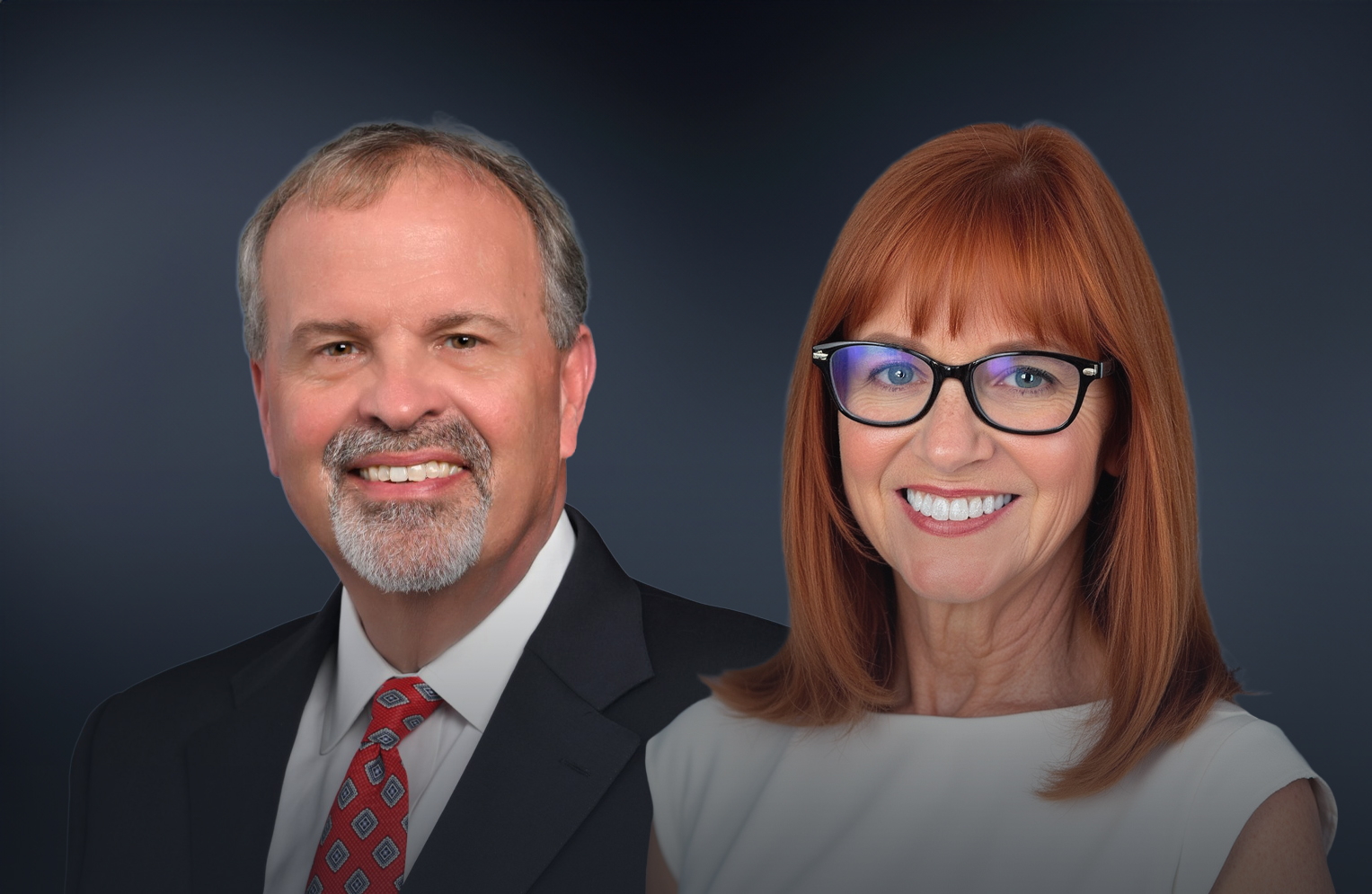

I think that demand for both existing affordable properties and new properties is going to be so huge. I think the occupancy rates and turnaround and length of stay are all going to be positive items, in the affordable industry.

In this episode of VERSED, Steve Kennedy sits down with Rod Burkett, Chairman and Co-Founder, and Julie Simpkins, Co-CEO of Gardant Management Solutions, to explore the growing importance of affordable assisted living. They discuss how this model fills a critical gap between private pay assisted living and skilled nursing, why it creates value for residents, states, and investors, and how advocacy, smart Medicaid policy, and long-term financing support sustainable growth. The conversation also looks ahead to Gardant’s people-driven vision for the next three to five years as demand continues to accelerate.
This is VERSED, powered by VIUM Capital, the podcast that brings you conversations with the leaders driving change in seniors housing and healthcare. I’m your host, Steve Kennedy, and together we’ll explore the insights, challenges, and solutions shaping our industry.
Steve 00:23
Welcome to this most recent edition of the VERSED podcast, powered by VIUM Capital. I'm really excited about this one in particular. We have leadership from Gardant Management Solutions, the largest affordable assisted living operator in the country and a group I've worked with for about two decades. And so, chairman and co-founder Rod Burkett and co-CEO Julie Simpkins. Rod and Julie, thank you for joining the VERSED podcast.
Julie 01:00
Excited to be here. First one in 2026, too.
Rod 01:03
Appreciate the opportunity Steve.
Steve 01:06
Well, first of all, before we get into affordable assisted living just for the audience, that may not be as familiar with Gardant. Maybe, Rod, if you don't mind, just give a little bit of an overview about Gardant Management Solutions and the scope of services that Gardant provides.
Rod 01:25
Yeah, I'd be happy to, Steve. I co-founded Gardant back in 1999 with a business partner. It was in reaction to Illinois passing the piece of legislation that created the Medicaid waiver program in Illinois for elderly waiver assisted living. And our whole purpose for creating the company was to increase accessibility and affordability in assisted living. Back in those days, we had two licenses with partners to develop. And were lucky enough to partner up with a lot of different developers and created a good pipeline over about the next 15 years. And Gardant for its first 20 years of its history was mostly involved with new development. But in the last five years, it has grown to be a lot of management acquisitions. So the portfolio is kind of, around 100 properties under management and pretty evenly spread between some original legacy new development properties and then acquisition properties that came into the portfolio in the last five years.
Steve 02:51
And, Julie, remind me, how many states is Gardant in currently?
Julie 02:56
We are currently in six states, mainly the Midwest, and we are expanding into the Mid-Atlantic.
Steve 03:02
Well, Julie, keeping with you, if you don't mind, maybe just describe for the audience the current state from your perspective of affordable assisted living in the US and why this segment is becoming increasingly important not only for Gardant, but just for for the population as a whole.
Julie 03:23
Well, affordable assisted living currently is really at a critical inflection point. The senior population is growing. It's growing rapidly that millions of older adults simply cannot afford a traditional private pay assisted living community, while at the same time, nursing homes are far more expensive and often unnecessary. We've seen that through our advocacy efforts, and we've seen that through the different states, in the six states in which we operate. And affordable assisted living really fills that gap by providing the dignity and support, the stability at a cost structure that works for families and works for the states that will invite a home and community based Medicaid waiver program into their state. And as longevity of people increases, retirement savings lag, the affordable assisted living really becomes essential. It's not optional. It's an essential part to the future of senior care. And I've noticed that both with what we're talking to new developers or people wanting to get into the space, as well as if we're talking on a national level, like for an NCAL board, for example, when you're talking with other industry professionals.
Steve 04:31
And is it safe to say that, and maybe this is too simplistic, but when I look at affordable assisted living, I look at it as a really a win-win for both private sector but also public sector, the resident. Because at the end of the day, you have senior citizens who need some assistance with activities of daily living. But those residents that, or those seniors who cannot necessarily afford private pay assisted living. And so what happens or what can happen is you can have these senior citizens maybe end up in a more institutional setting, like a skilled nursing facility on Medicaid. And, while skilled nursing facilities obviously play a very important role in our senior living care ecosystem, they're designed for a certain type of population. And seniors would likely prefer to be in a more residential setting than a more institutional setting. And it goes without saying that the state, it's a lot more cost effective for the state to fund a medicaid waiver resident at an assisted living facility compared to the daily cost of Medicaid at a skilled nursing. Is that fair, or is that too simplistic?
Julie 05:53
Simplistic is a good word. It confuses me why everybody can't get on board with it, especially when we're talking about people looking at a state budget, for example, and understanding the dynamics behind it.
First of all, I would say our skilled partners also understand and they say they want somebody to live as long as they can in the lowest level of care that they possibly can. So our skilled partners are on board again, they're our partners. We're all part of the continuum.
There's this unique place right now that is kind of this middle market affordability place. And there's been a lot of, there's been research and people talking about this middle market. The forgotten middle, the forgotten middle market, this middle market gap. But if you could do something like Gardant’s done and said, we can blend where a middle market heavy price point for the middle market where somebody is not spending down as quickly as they might would, and maybe some higher private paying communities, which is also a place for them. There's a place for everybody here. They're not spinning down as quickly, but if the transition to Medicaid happens, then you don't need to leave your home. You can stay in the same environment. You can have your longevity, you can have your wellness, you can have all of your friends and everything's there. And because Gardant has chosen to really be purpose built for the affordable assisted living, we have all the back office stuff that goes along with that, where a lot of providers don't. Because, Rod and when he co-founded the company, saw that this was a need 25, 26 years ago. And we're seeing that now as we're going into different markets. So even though we're the largest affordable, we still have a private pay mix because we're serving both. We don't want somebody to have to leave.
Steve 07:32
Right. I'm glad you highlighted that most of your properties serve both populations Medicaid as well as private pay. And highlighting that middle market emphasis, I know we all see each other, whether it's at NIC conferences or AHCA/NCAL and so many different conferences. But that does seem to be a focus and opportunity. And Rod maybe I'll pivot sort of in that vein from an investor perspective, you've been involved with enough of these properties. When you look at the capital necessary to fund either new construction or acquisition and rehab, it's a little bit more nuanced because by nature of affordability,, the margins are going to have some limitations. And so from an equity perspective, from a debt perspective, maybe talk about what do you think from your time in the industry, makes affordable assisted living an attractive asset class for long term investors compared to other senior housing product types?
Rod 08:31
Steve, the first point I think I would emphasize is that the demand or the market is so deep compared to the upper one third income of seniors. This affordable market, those that would qualify for Medicaid or soon would qualify for Medicaid after moving in and exhausting their own personal assets, that market maybe triple or quadruple what the more upscale upper end markets would be and pretty much virtually almost every market, be it, rural, suburban or urban, that, affordable market is going to be so much deeper. And I think really since, Covid with cost escalation and interest rates and I think you read any journal article, you can say the industry's maybe only been, building one third of what is going to be needed over the last five years. So I think that demand for both existing affordable properties and new properties is going to be so huge. I think the occupancy rates and turnaround and length of stay are all going to be positive items, in the affordable industry.
Steve 09:53
Yeah. From an investor perspective and lender perspective, I mean, we look at the asset classes like you highlighted, you've got relatively high occupancy. You tend to have waiting lists. You have a lack of construction. But there's still enough margin that's produced at the asset level that allows you to reinvest in the facility, expand, maybe buy other facilities, return a reasonable return to investors and, without a lot of the risks associated with some private pay, including that this is more of a need based. I mean, it's sort of toggles between need and want. But from an investor perspective, I think that's been appealing just for the consistency of returns when investing capital in this asset class.
Rod 10:48
Yeah. The only caveat I would add in there is, as you mentioned, margin. Yes, in certain states, it still is a state by state decision on what the reimbursement level is, what the reimbursement methodology is. And so there's a good number of states where reimbursement levels are such where the margin makes it a good investment. There's a lot of states where it's very difficult or next to impossible to do it. And I think those are states that don't get a lot of involvement by developers and operators just because the reimbursement level is so low.
But I think the other is the scalability. If you can take all the income levels, including, middle market and the lower income residents, then, to build in a lot of markets, 100 units, up to 150 units that you might not be able to scale that volume and have the efficiencies and development and the efficiencies in daily operations if you were just building for a 100% market rate. So that's one of the other, I think, positive things that makes it very attractive for the investor is getting each property to that sweet spot of efficiency.
Steve 12:15
Yeah. Well said. You have that diversity of sort of revenue stream. And if you're an investor that feels good, you're not overreliant on one thing or the other. What else would you add, Julie?
Julie 12:26
To Rod’s point, the states in which you choose to operate are really important. And this is where, from an operator standpoint and an investor standpoint to combine the advocacy efforts on each state. And I'll give you some examples. So there are some states within the US that do not have a medicaid waiver program for assisted living. There's some some states that have, which we'll call common community based services that assisted living will be with 14 or 15 other programs that are trying to share this pot of money, and that's hard to manage. And then you have a couple of states, more than a couple, that have decided that we are going to have a separate waiver program for affordable assisted living. Illinois and Ohio being two of those. And when that happens, when you talk about the resilience for an investor or a resilience for an operator, it also in addition to consistency, there's also predictability there. And you don't have this risk of what happens when there's a new change in administration or change at a director of an agency, for example. What happens when there's a change, especially when you're sharing programs. So understanding what state you're going in, but also knowing that when we look at an investor standpoint right now because Rod had talked about the demand. The demand is huge. So if we don't come together and go into these states and say we have programs at work, look to other states, that has something that's been sustainable over the past 25, 26 years, and we know it's going to be sustainable going into the future. Let's take these programs and pull them into other states. Let's kind of remove these partisan barriers and say, what's working here can work over here, too. I know Rod has used a phrase many times. It says it's really not about more Medicaid, it’s smarter Medicaid. And there's research to prove that this is smarter Medicaid. And Steve, you know this because we've pulled information together. We've come to states and sat with, we have a lot of respect for our state and U.S. Representatives. They have a really hard job. It's our job, then, to provide them with a lot of data and a lot of real life stories so they can make informed decisions.
Steve 14:28
Well said, and I think you, both of you, have done such a masterful job of not just being present in the advocacy scene, but taking a leadership role, whether it's on AHCA/NCAL board roles or even even at the state level in Illinois, the Affordable Assisted Living Coalition has been such an impressive organization that I think serves as a model, but also one that's collaborative. And if states want to learn, AALC is open to helping them. Obviously you two and Gardant leaders, the rest of Gardant leadership are so there's very much a good public good that's kind of fueled, I feel like by not only this product type, but by the way, in a very bipartisan way, that you all approach it.
And so we talked about some, I guess, tailwinds and some headwinds. But as you know, and a lot of the ways in which we've all worked together, historically has been from a permanent financing perspective. And the HUD 232 program has been around for a long time. And I remember it was about 20 years ago where Rod and me and a couple other folks went to DC and HUD was starting to do some 232 223 F refinances of affordable assisted living and Illinois supportive living facilities. And they love the prototype, right. Because it's meeting a need that's consistent with HUD's mission. You've got average occupancies that tend to be in the mid to high 90%. You have debt service coverage ratios that are solid. It's sort of what's not to like. And so I know in Illinois over I think over half of the supported living facilities are in the HUD portfolio from a financing perspective. Maybe Rod talk a little bit about how HUD financing has been an important permanent debt option for Gardant, but just affordable assisted living in general.
Rod 16:24
Yeah, I think one of the first and foremost positive things on the HUD loans are the non-recourse status of it, I think allows developers a good sense of comfort and helps create volume. I think HUD financing is just rock solid, reliable, financing. And it can be repeatable, scalable. So I think a developer that might be a short term hold to develop and reset resale, maybe it's not the right recipe, but I think especially for long term hold, it is just a rock solid partner with the developer and the operator. I think in our company, we just made the decision to be able to piece together creative financing. We're going to have that patience and have the back office to go through whatever bureaucracy there is involved in creative equity or in HUD type of financing, and you can just rely on it and repeat the development. And I think, the various syndicators and HUD originators and consultants that we've worked with, once you have proven that this works and risk mitigation is there and nobody can debate that the the resident, the end users are just so deserving of being residents and the communities do so well when you look at them from investment side of things and they do so well and the human side of things. As you mentioned earlier, Steve, it's kind of a win win win all the way around.
Steve 18:31
Yeah, that's well articulated about HUD financing. And you also mentioned syndicators and, some of our audience might not be familiar because that's bringing the affordability from a tax credit equity perspective into it. And I've always thought that Gardant's business model of understanding tax credits, because some of these necessitate tax credits and 4% bond financing to effectuate a property development due to the restrictions of affordability. Other times, tax credits are not necessary. It just depends on the market, the overall basis of the project. And so to be able to wear that tax credit hat, but also be able to secure more traditional private capital as your equity source. The good news is on the HUD front, it can work with both. And at the end of the day, it understands how to work with both.
You know, before we get into the final question, I always like to ask about maybe your favorite podcast or book. Maybe paint a picture and we'll start with Julie. What does the next 3 or 5 years look like for Gardant?
Julie 19:46
We talk about the next 3 or 5 years a lot. And if we look at the last three years or the last 25 years, there's three pillars that we base things on: we look at people, purpose and goals. And so we came out of this three years and kind of said, hey how did we do with our people, purpose and goals? And we exceeded what we had hoped to do. And so our next strategic three years is based on people, purpose and goals. And the people piece is big. Because, first of all, who are we serving, who's serving the people that we're serving and how well are we developing others? How well are we meeting the needs? How are we understanding what the needs of the next cohort are going to be? People talk about baby boomers. Well, there's such a wide range of what the needs are between what you're building today and investing in today and what it's going to be ten years from now.
So we continually plan on the people piece, and then we rely on a purpose and say, what is the purpose look for us. And the next 3 or 5 years, we want to be serving 24,000 people because we know the demand is there. We also know that we are uniquely suited to meet the demands, with the people we have on board and the people that we're developing, the people that are coming into our organization and the way that we are built within our mission, we're uniquely suited to serve. We can serve 24,000 people, in, we say the next 3 to 5 years. And, we need others to do the same thing because there's going to be a lot more than 24,000 people that need to be served in the next 3 to 5 years. And so that is our purpose. And that's also what our goals look like.
So, Steve, I would say that's what is for Gardant. So we continue to resource what we need in order to meet that. And it's all in service of people.
Steve 21:26
That was a really good answer. And that was not a scripted question. That was off the cuff. And I can tell Rod feels just relieved that you took that question because you just nailed it. Anything you'd add, rod?
Rod 21:39
Maybe the only thing I would add is, the boomer generation, which we've mentioned before I think that, congregate living, assisted living, the boomer generation who's changed a lot of things about our society. Being at Woodstock, protesting wars, women's rights. I think the boomer generation, majority is appreciative of how they've changed, our world and our norms. So congregate living the fact of living with your peers, making new friends. And that's still gonna, I think, excite them. But they are going to be a more educated, more demanding, end user of our services. And I think they'll want to be involved and engaged right up to their very last day. So I think assisted living and Gardant, we have to continue to evolve with them to make sure that end user still looks upon assisted living as it's very acceptable, and they can rely on the health care services, the personal care services that are baked into it, but it just shouldn't feel like an institution. And they should have a say so, be very involved in their lifestyle experience right up to the very last day. So I think that Gardant is committed to that. It does take, I think, a little bit of growth and evolvement on how we market and how we frame that lifestyle and that it is not an institutional flavor.
Steve 23:26
All right, Julie. What's that one podcast or book or something else you might share with the audience that's been meaningful to you?
Julie 23:35
There's many. I will say I just recently purchased five Stephen Covey books on The Speed of Trust. And this is something else that I would encourage others to do as an executive leadership team. We coach together. We have a professional coach that we coach with, to have these kind of conversations and make sure that we're aligned with our people, purpose and goals. And, many times there's a shift, you can have a great three years and then you have this vision for the next three years. And it's like, wait a minute, it feels a little different. And trust can wane. It can, it can shift a little bit, which is not a bad thing. It just tells you that you're human and you're willing to discuss it openly. So, we're rereading The Speed of Trust. I went and bought five books for our executive leadership team, and it's something I've read three times before. He wrote it a long time ago and it's still as relevant today.
Steve 24:26
Rod, what say you?
Rod 24:30
I have to credit my wife with a book. It's in the house that she grabbed a couple months ago called The Psychology of Money. I can't quote you the author, but tagged on and began reading it and listening to the audio version of it. And the difference between being rich and being wealthy, regardless of how much money you might create, how are you using it? Are you using it to really live out the lifestyle that suits you? And so that's the wealthy part. How are you using dollars to create the life that you wanted? An example of a guy that was, I think working in accounting and finance, but he really wanted to be a musician. And, 20 years ago, when he first got his $20,000, that's all he needed to kind of create the nest egg, and kind of became a musician and said I never worked another day in my life. And it was only $20,000, but for him, he used that wealth to create the lifestyle he wanted. And so, I think there's a lot of good perspective in the book personally and professionally.
Steve 25:48
Well, Julie and Rod, thanks so much for taking some of your valuable time to be with me on this latest edition of the VERSED podcast. And for the audience, thanks for tuning in. We'll have more exciting, informative, and engaging conversations coming up in 2026. So thanks again, and happy new year.
Outro
Thanks for tuning into VERSED, powered by VIUM Capital. The conversation doesn’t stop here. Let us know what topics you want to hear, and let’s make an impact in healthcare and seniors’ housing together. Until next time, I’m your host, Steve Kennedy, and this is VERSED.
Other Episodes




.avif)


VIUM CAPITAL, LLC
995 YARD STREET
SUITE 380
GRANDVIEW HEIGHTS, OH 43212
Contact Us
614-363-2001
.avif)
.svg)


.svg)